



What is pattern base trading?
Pattern-based trading is a method of technical analysis where traders look for specific, repeatable geometric shapes or “patterns” formed by price action on a chart.
The core philosophy is that price movements aren’t random; they reflect the collective psychology of buyers and sellers. Because human emotions (greed and fear) tend to repeat under similar circumstances, these visual patterns often precede predictable price movements.

1. Types of Trading Patterns
Patterns are generally categorized into two main groups based on what they signal about the future direction of the trend.
A. Continuation Patterns
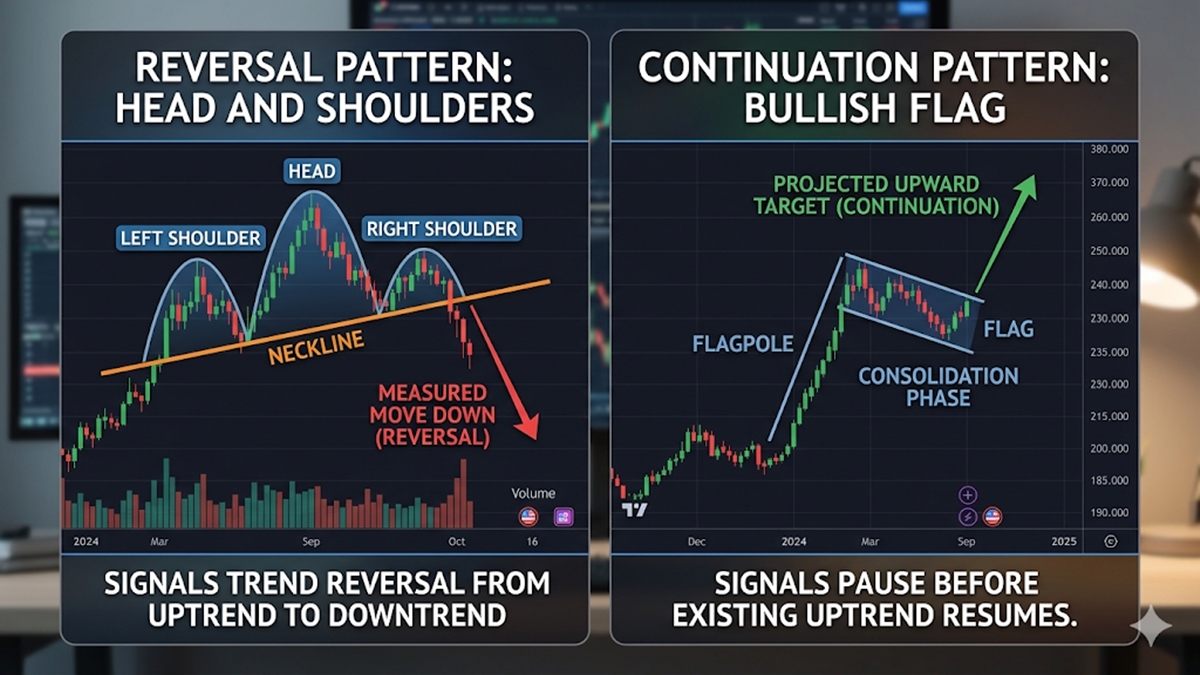
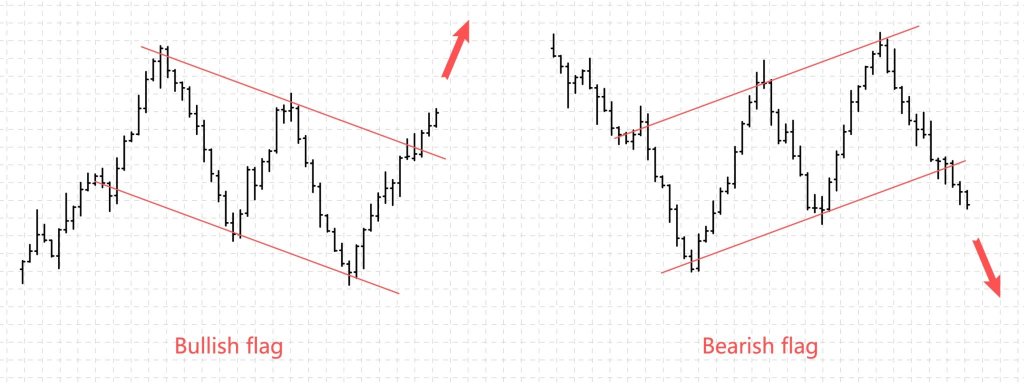
These suggest that the market is taking a brief breather before resuming its current trend. If the market was going up, it pauses, forms a pattern, and then continues upward.
- Flags and Pennants: Small consolidations that look like a flag on a pole.
- Rectangles: Price bounces between parallel support and resistance levels.
- Symmetrical Triangles: Price makes lower highs and higher lows, narrowing into a point.
B. Reversal Patterns
These signal that the current trend is losing steam and a change in direction is likely.
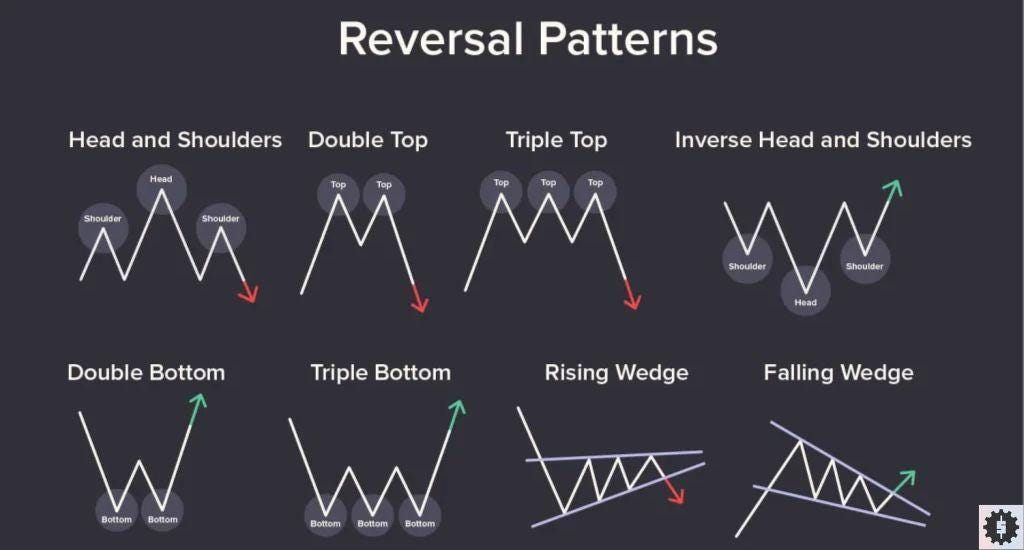
- Head and Shoulders: Features three peaks, with the middle one (the head) being the highest. It signals a shift from bullish to bearish.
- Double Tops/Bottoms: Price tests a level twice and fails to break through, looking like an “M” or a “W.”
- Falling and Rising Wedges: Narrowing price ranges that slope against or with the trend, often leading to a sharp breakout in the opposite direction.
2. How to Trade Them
To trade patterns effectively, most traders look for three specific components:
- The Setup: Identifying the pattern as it forms (e.g., seeing two peaks for a Double Top).
- The Breakout: Waiting for the price to close outside the pattern’s boundaries (support or resistance).
- The Target: Many patterns have a “measured move” potential. For example, in a Rectangle pattern, the target is often the height of the rectangle added to the breakout point.
3. Pros and Cons
| Pros | Cons |
| Objective Rules: Provides clear entry and exit points. | False Breakouts: Price may break a pattern but immediately reverse. |
| Visual Clarity: Easy to spot on various timeframes (1-minute to monthly). | Subjectivity: Two traders might see two different patterns on the same chart. |
| Risk Management: Allows for precise stop-loss placement just outside the pattern. | Lagging Nature: By the time a pattern forms, a significant part of the move might be over. |
4. Pattern-Based vs. Modern Concepts
While traditional pattern trading relies on geometry, many modern traders combine these shapes with market structure. For instance, a “Double Bottom” is much more powerful if it occurs at a major institutional “Order Block” or aligns with a “Change of Character” (CHoCH).
Click here for free course!
ADMIN
03/04/26
